







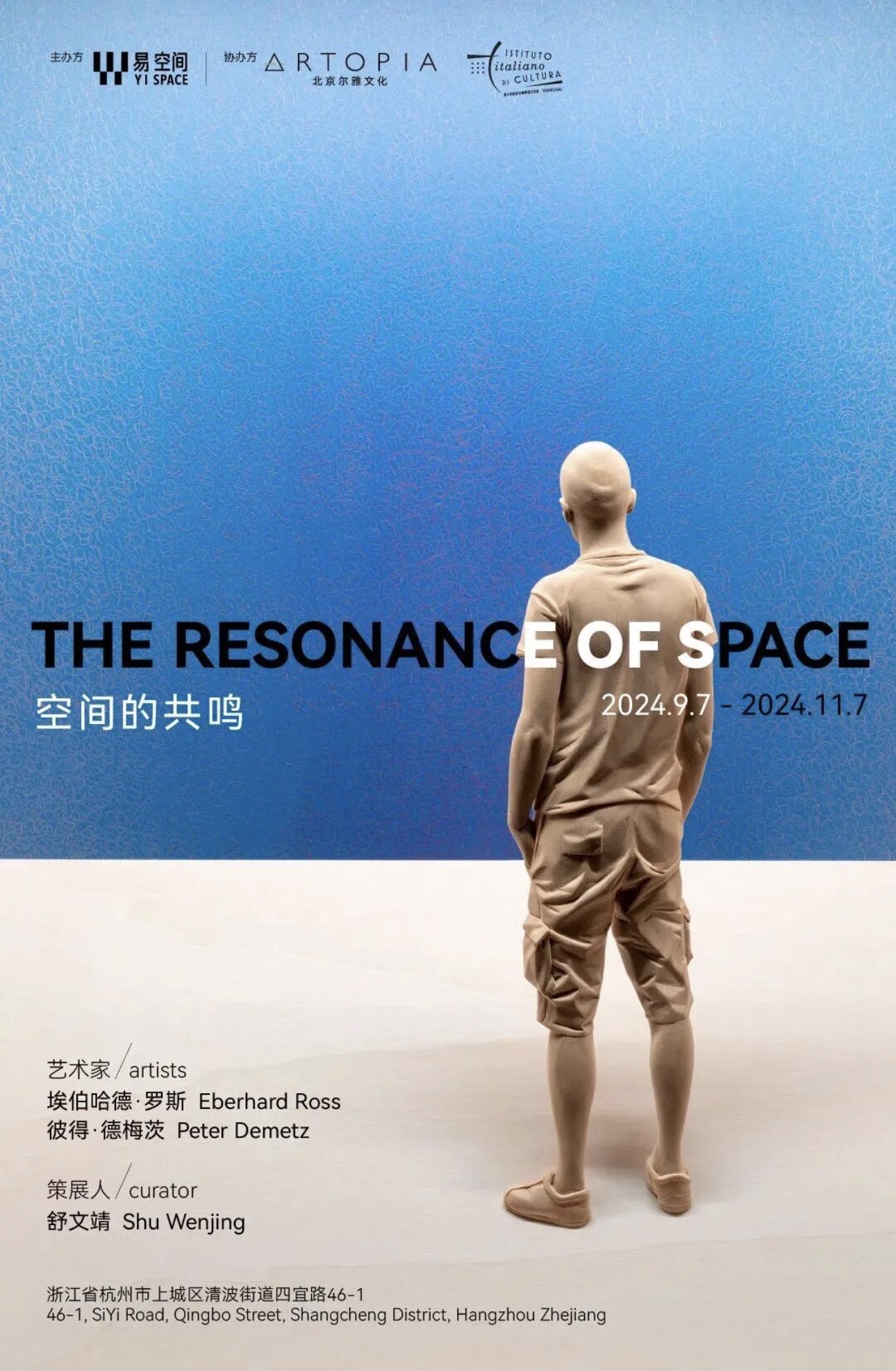

The Resonance Of Space
2024.09.07-2024.11.07
Artist
埃伯哈德·罗斯 Eberhard Ross
彼得·德梅茨 Peter Demetz
埃伯哈德·罗斯 Eberhard Ross
彼得·德梅茨 Peter Demetz
Organizer
Yi Space
Yi Space
Supporter
Artopia
Artopia
Curator
Shu Wenjing
Shu Wenjing
Address
Yi Space, No. 46-1, Siyi Road, Qingbo Street, Shangcheng District, Hangzhou City
Yi Space, No. 46-1, Siyi Road, Qingbo Street, Shangcheng District, Hangzhou City
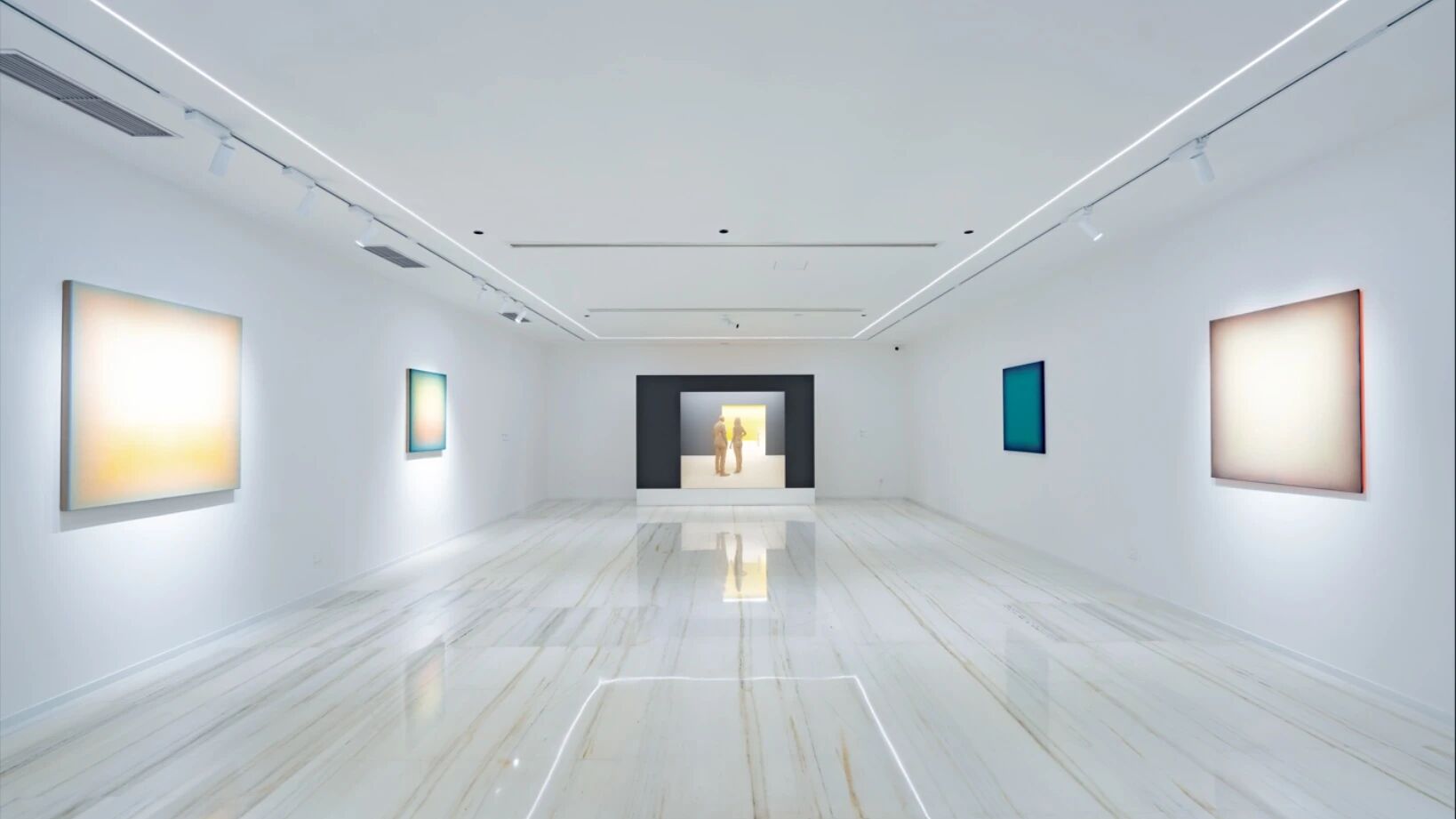
In contemporary society, the time required for people to traverse space has dramatically shortened. This reality of "time-space compression"—a key concept proposed by prominent Neo-Marxist scholar David Harvey in his book *The Condition of Postmodernity*, suggesting that "the history of capitalism has been characterized by a speed-up in the pace of life, while so overcoming spatial barriers that the world sometimes seems to collapse inwards upon us"—presents artists with new challenges and anxieties in their perception and expression of time and space. The rich spatial concepts of ancient Greece have endured, leading our understanding of time, shaped by preceding perspectives, to become gradually geometricized, abstracted, and quantified, in an ongoing attempt to elucidate the unique qualities of time and space themselves. The brushwork of German artist Eberhard Ross is delicate; his chosen minimalist aesthetic draws viewers into the "heterotopia" he creates. When the audience faces his work, the bodily sensation of time is replaced by a new experience. The "aura" of creation, while extending us an invitation, simultaneously turns its gaze back upon our inner selves.
Walter Benjamin, in his essay "On Some Motifs in Baudelaire," expressed: "Experience of the aura rests on the transposition of a response common in human relationships to the relationship between the inanimate or natural object and man. The person we look at, or who feels he is being looked at, looks at us in return. To perceive the aura of an object we look at means to invest it with the capacity to look at us in return."
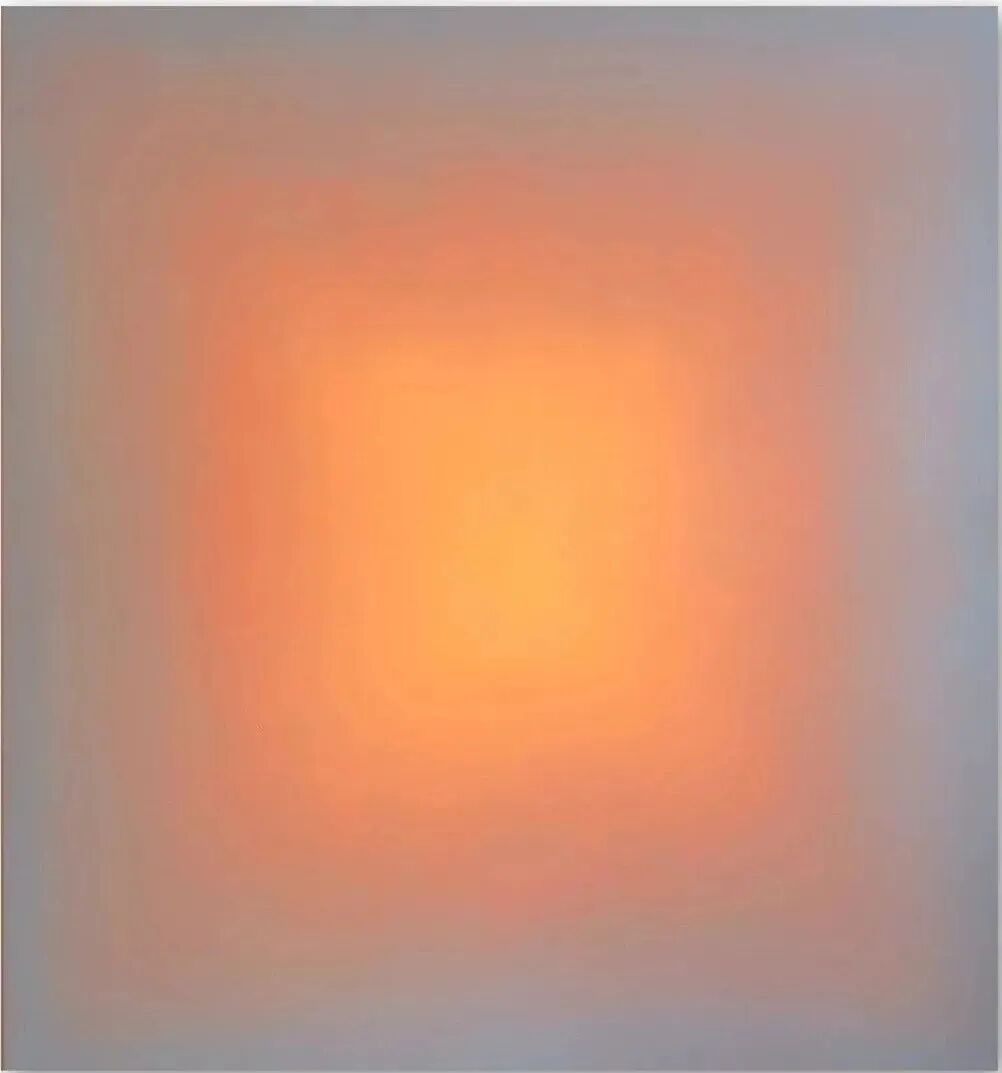
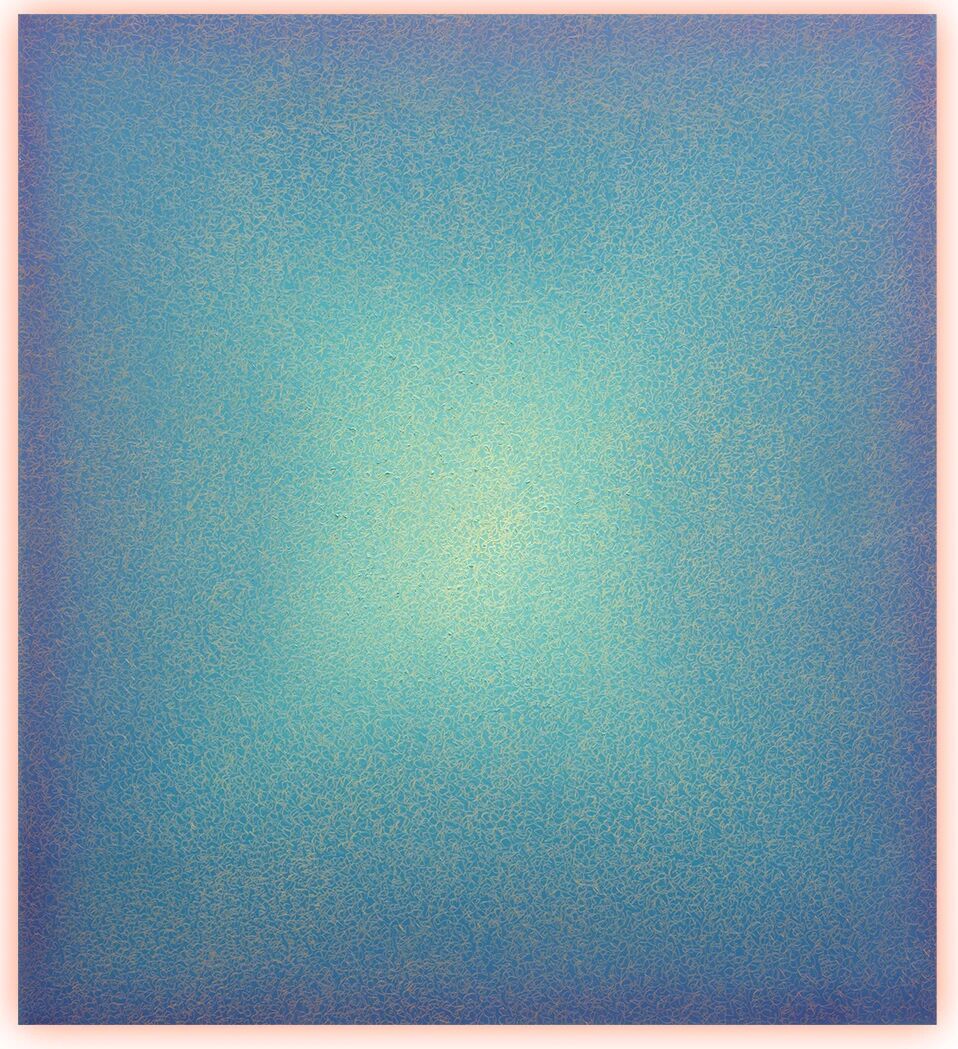
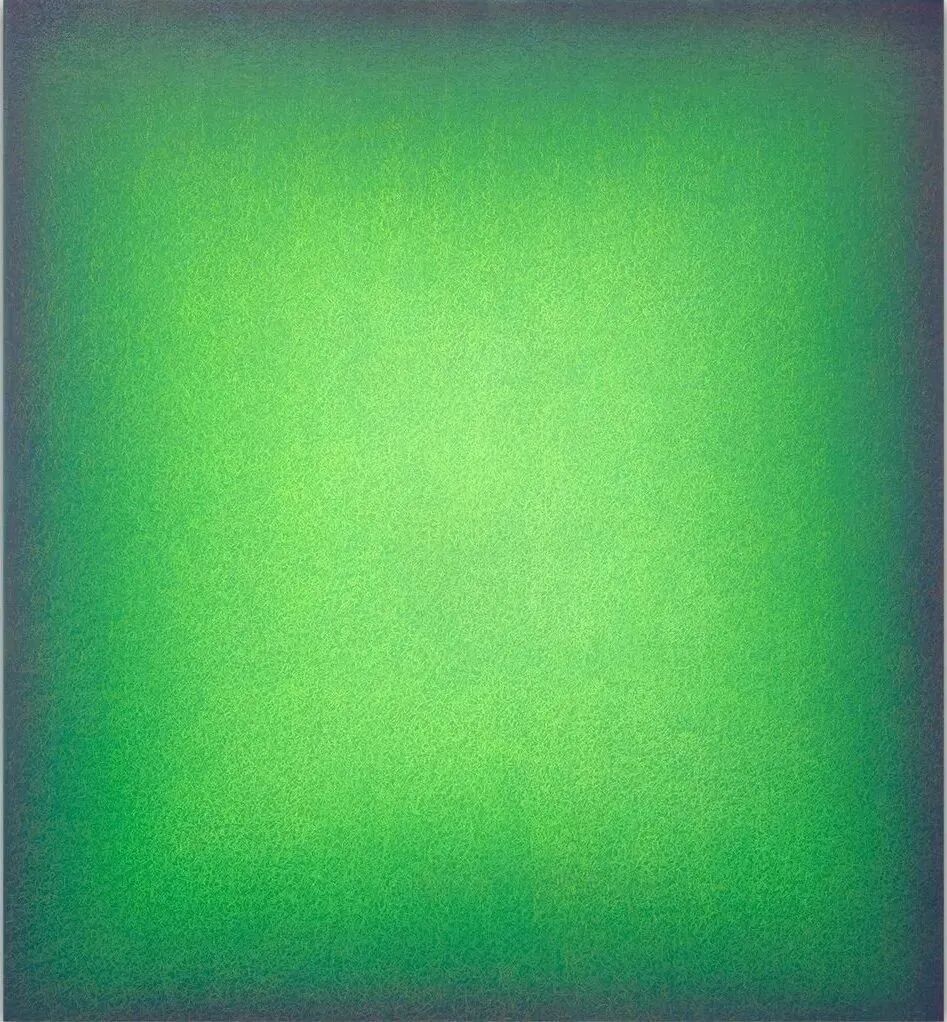
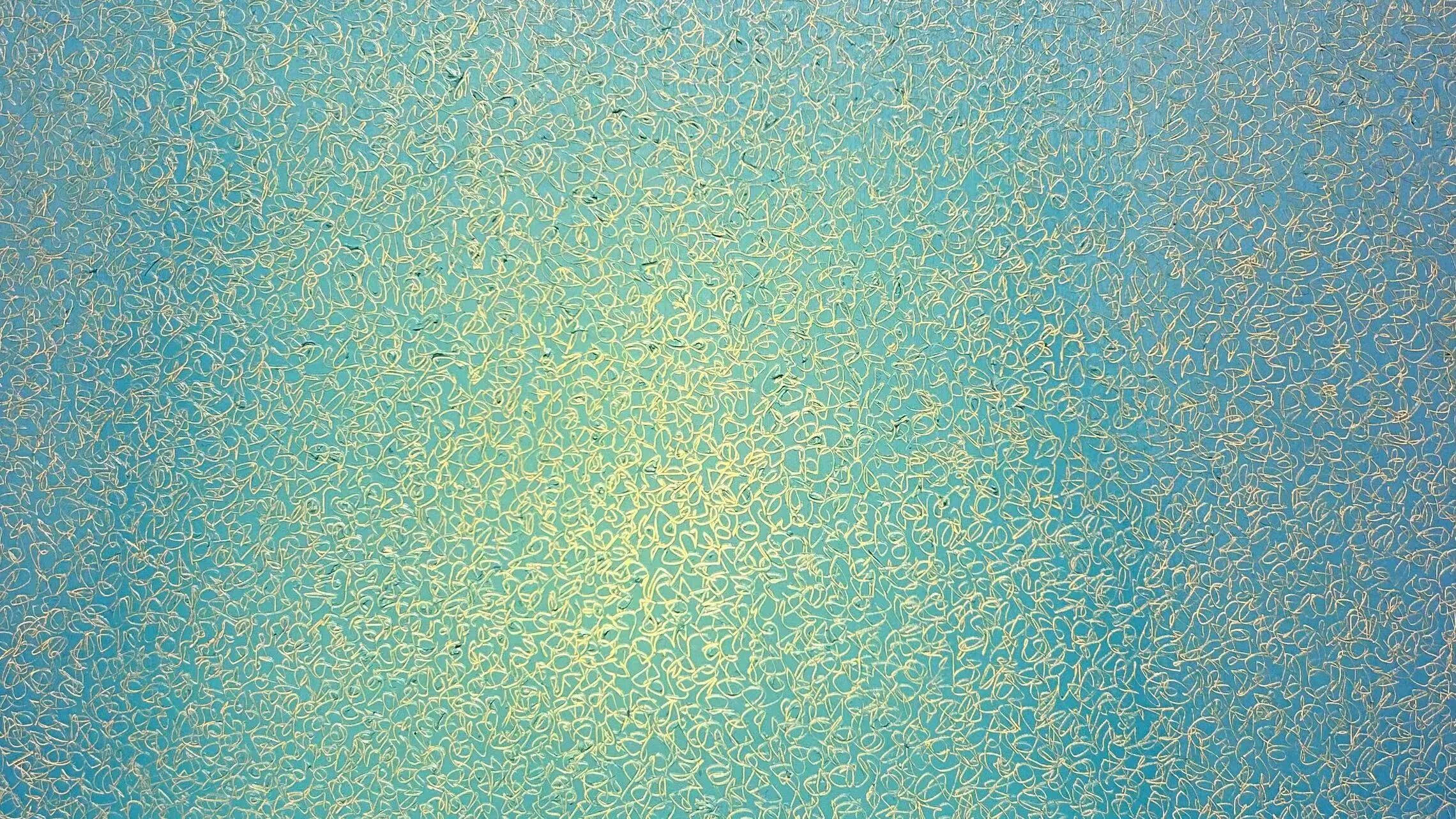
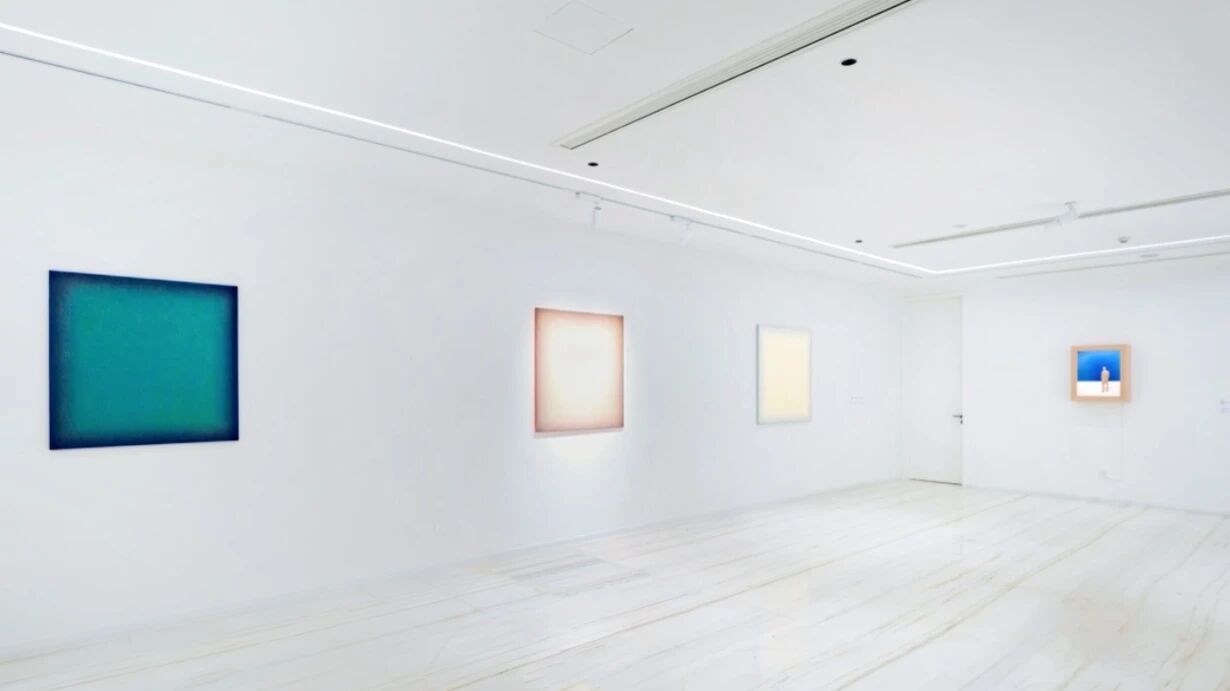
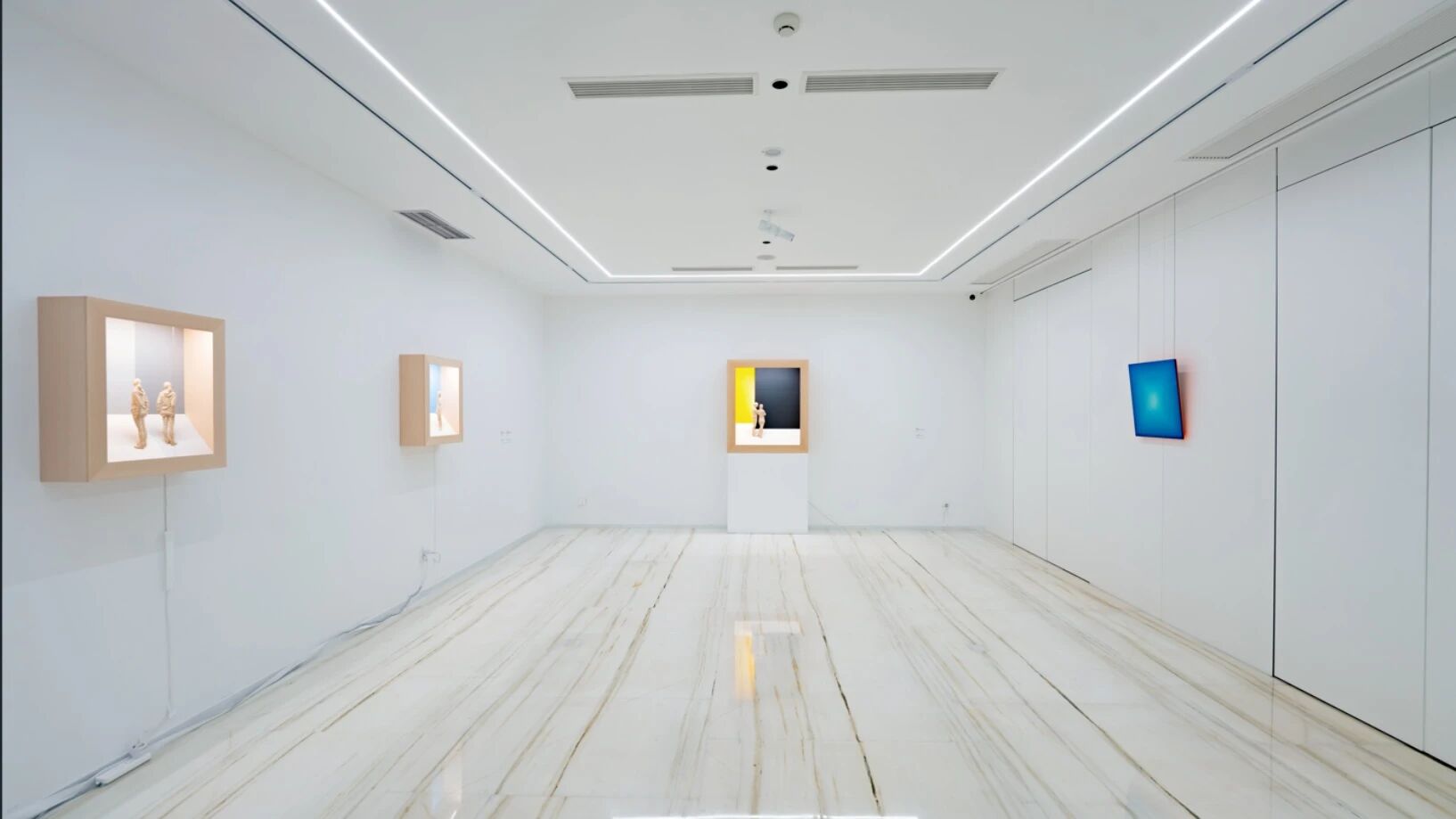
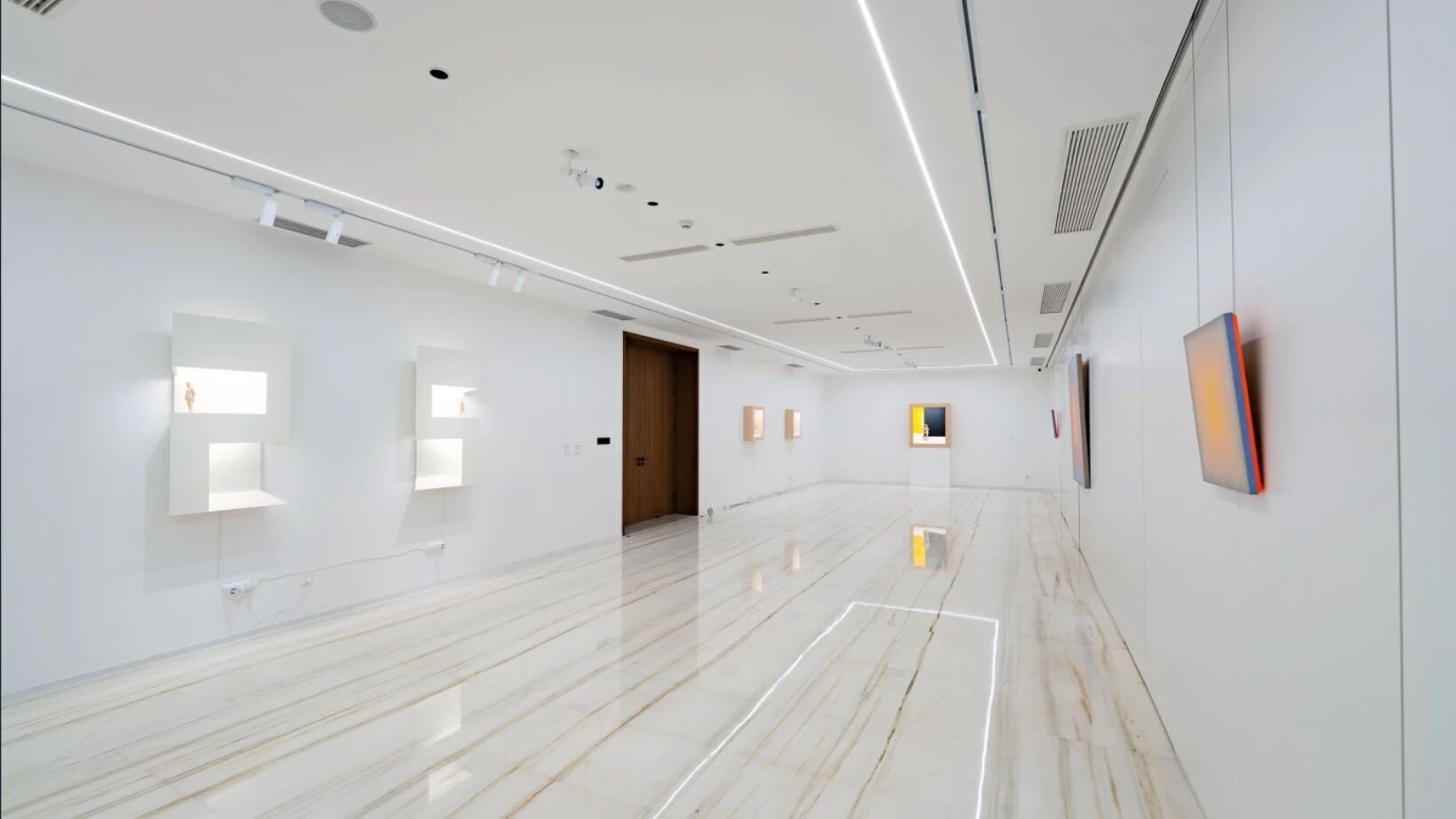
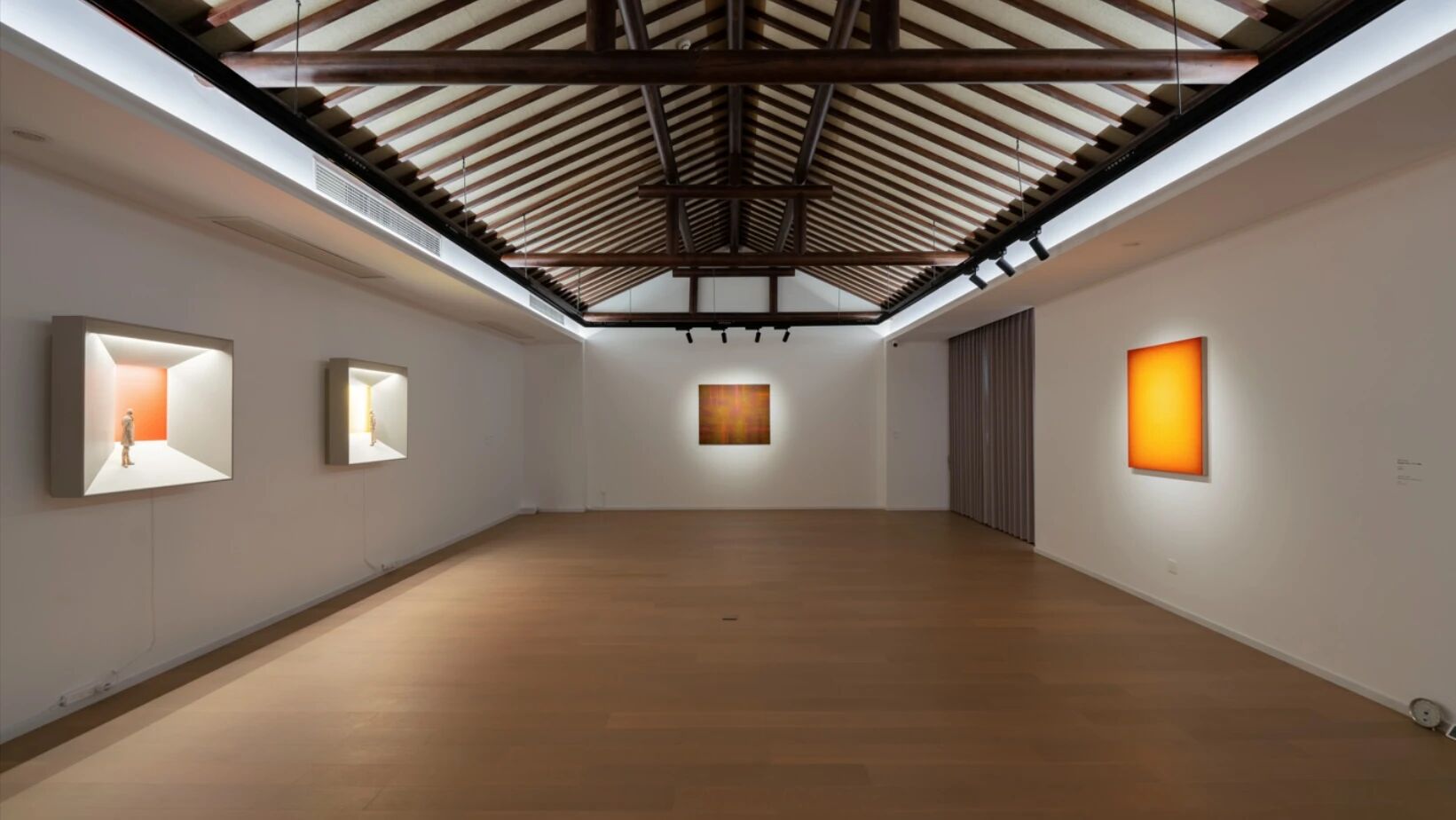
Eberhard Ross, hailing from Germany, currently lives and works between Frankfurt and Düsseldorf. His work releases the aura of color through minimalist abstract painting combined with the "emptiness" or "reserved space" of Eastern art. The color gradients are subtle, the lines delicate and intricately complex, with striking effects. This chosen minimalist aesthetic draws viewers into the "heterotopia" he creates. When viewers face his work, the bodily sensation of time is replaced by a new experience. The "aura" of creation, while extending us an invitation, simultaneously turns its gaze back upon our inner selves. These works not only emit a powerful radiance; at times, perplexed viewers might vainly search for an artificial light source. Each piece allows one to perceive the myriad colors of light and a sense of beautiful artistic conception, akin to the changing seasons, revealing the wondrous colors of life, nature, and the cosmos. For the artist, colors possess sound. When he looks at colors, he hears them emit sounds. This is a resonant relationship between the artist and color. He hears the breathing of colors, observing their voices and exquisite rhythms.
Another source of inspiration for the artist comes from patterns in nature. In his youth, he carefully raised three sons, developing the habit of observing and experiencing nature with them daily. This encouraged him to observe flora and fauna more closely. Over time, he was able to recognize recurring patterns and structures in the natural world. The dense, continuous brushstrokes and textures in his works resemble, under a microscope, the fission of cells transforming through time and space, revealing the artist's fascination with the essence of life and natural patterns—such as the textures of shells, leaves, butterfly wings, and plant cells...
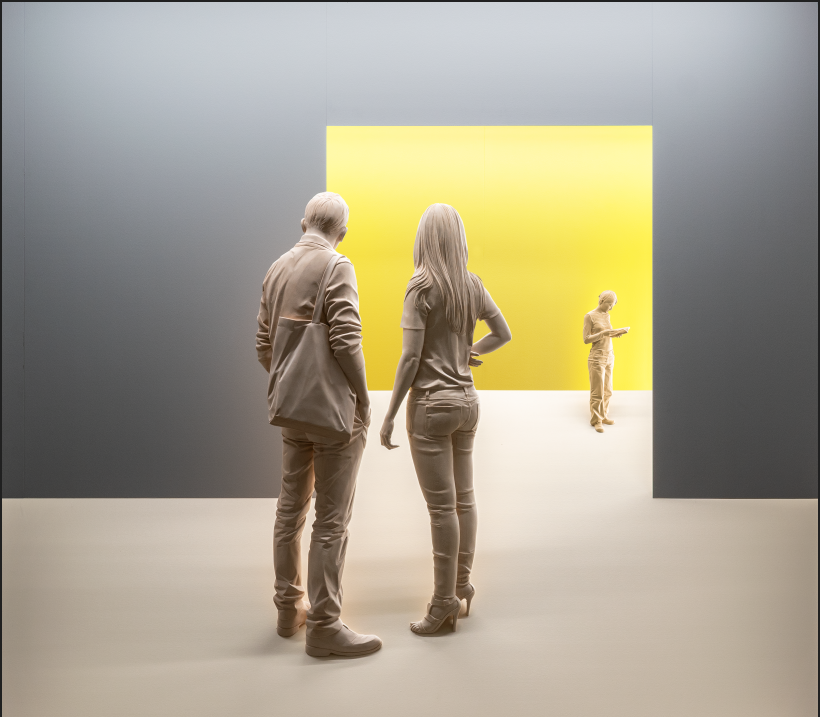
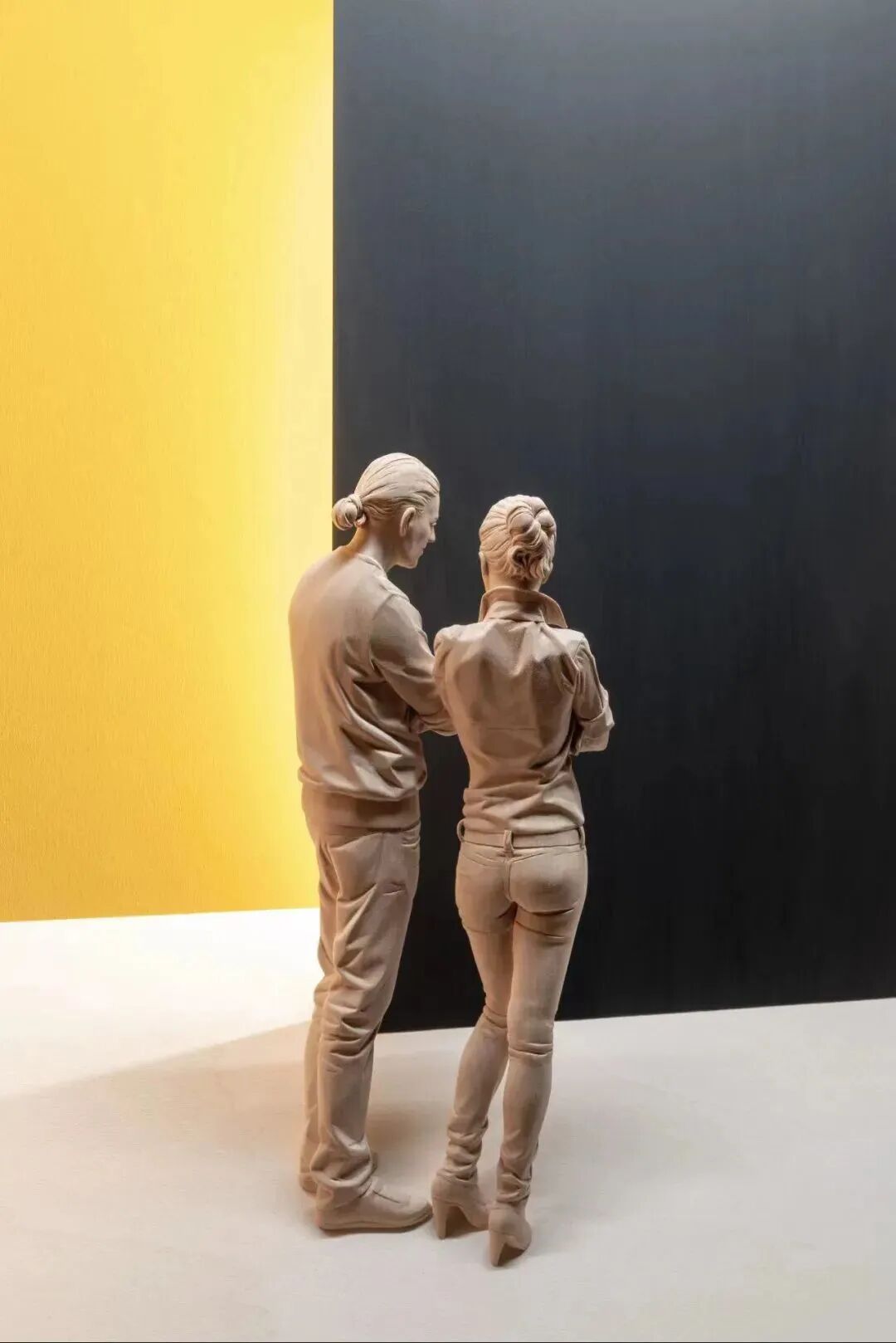
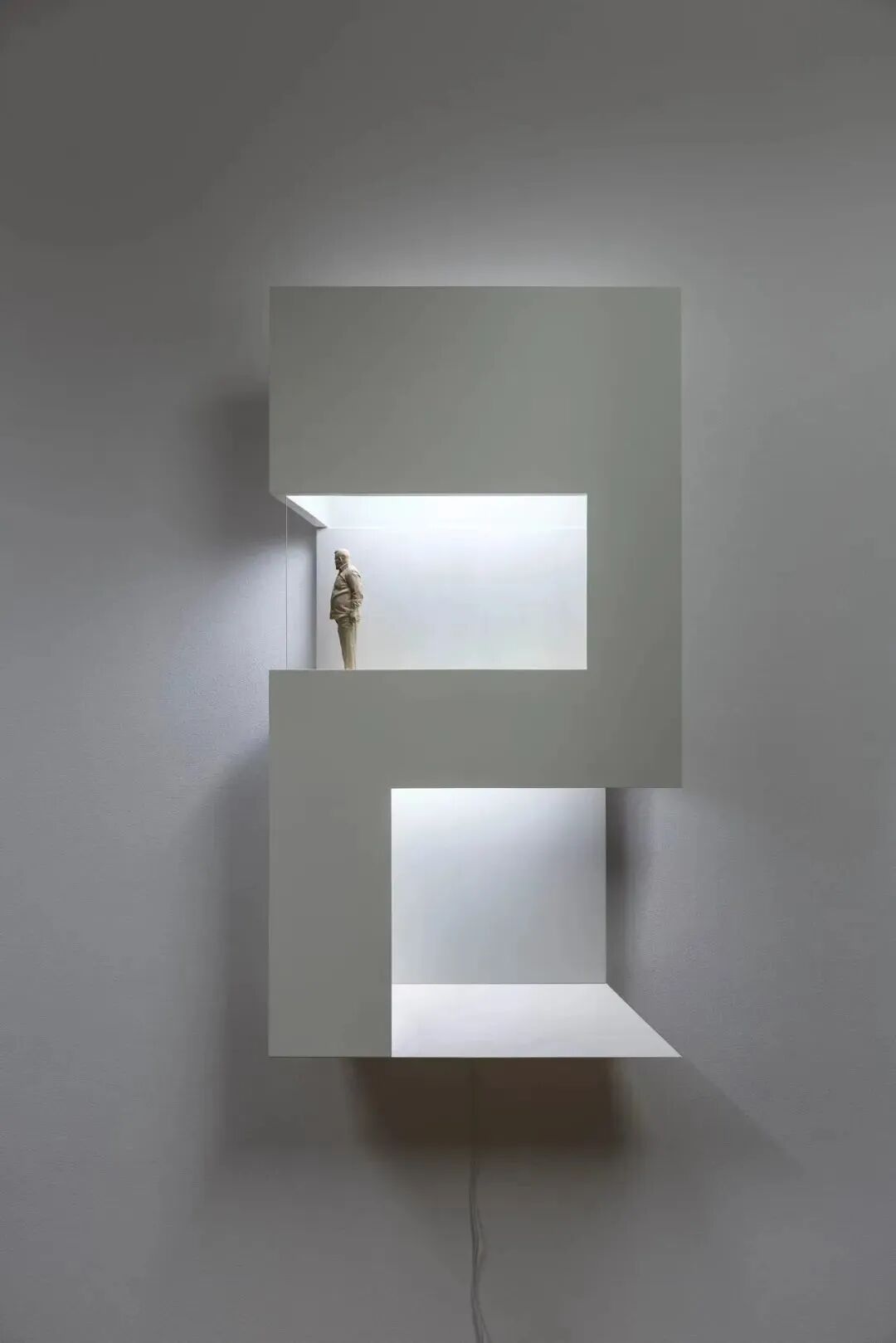
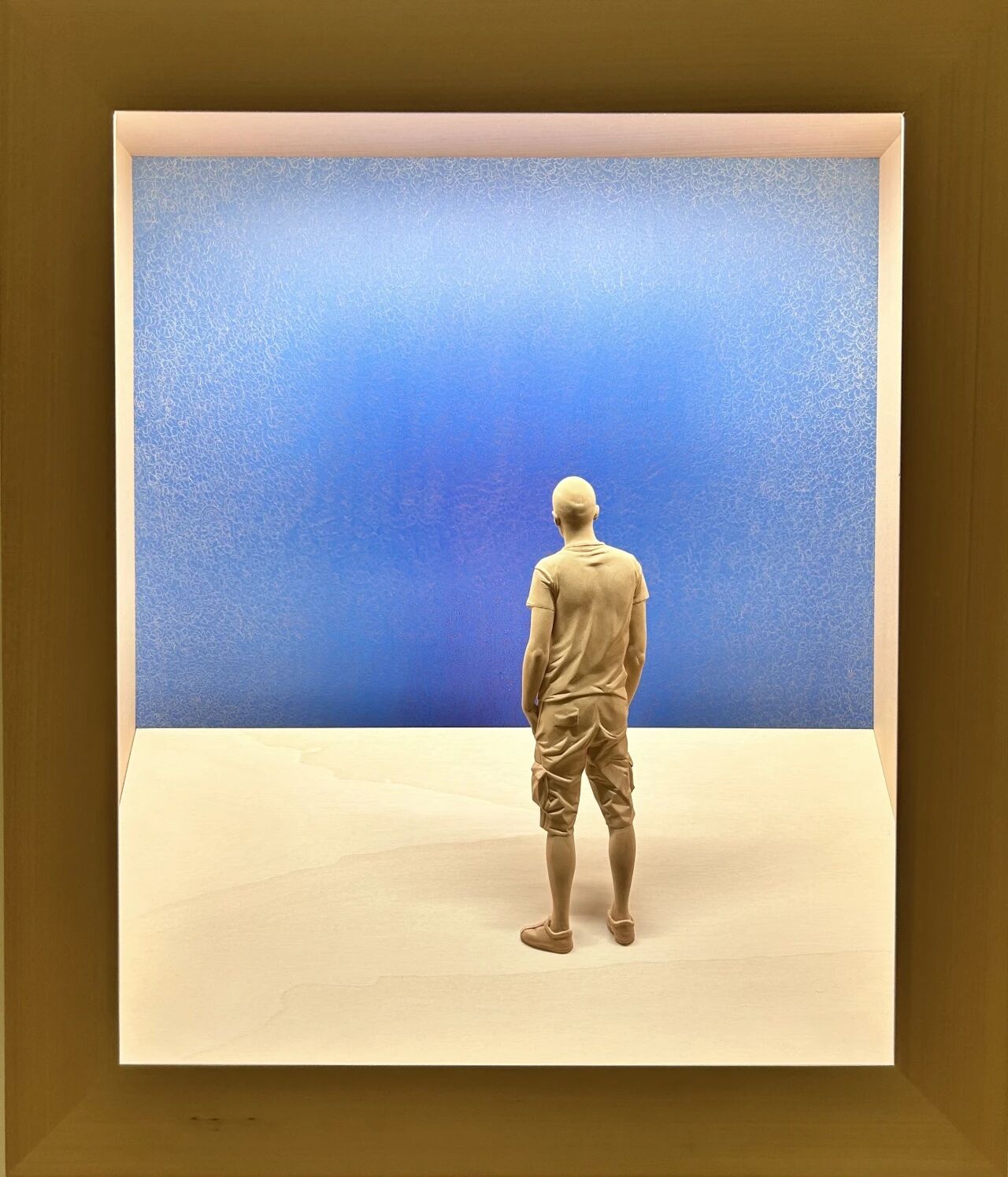
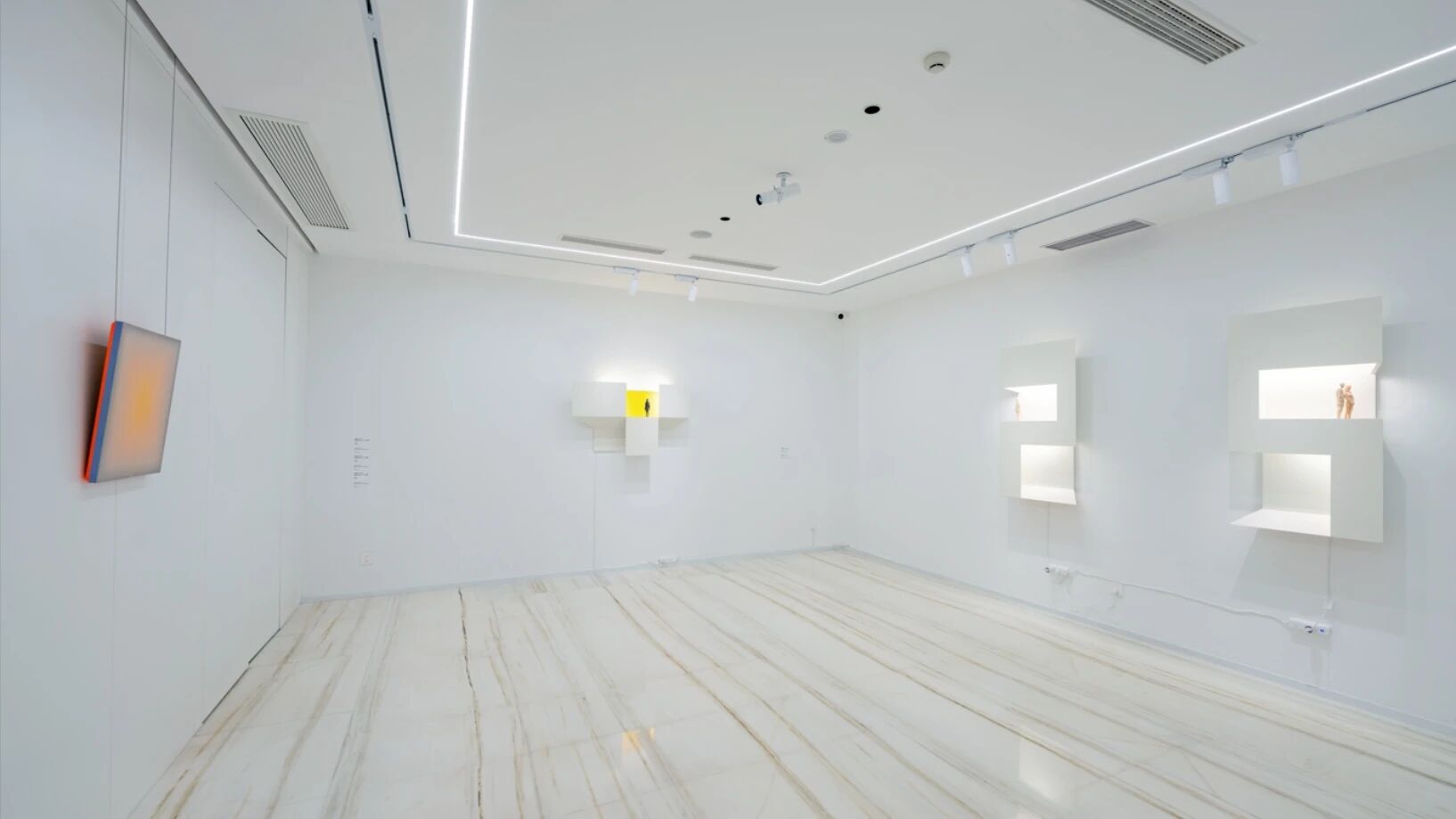
Peter Demetz comes from the Val Gardena region in the Dolomites of Northern Italy, an area with a long tradition of wood carving, renowned for producing famous wood sculptors since the Middle Ages. Peter Demetz's work has long delved deeply into "spatial relationships." His sculptures resemble a true parallel world; our minds generate microcosms based on the cleverly designed sculptural contours. He consistently employs perspective structures, directly leveraging the powerful intuition of central perspective—a theory formulated in Florence, Italy, in the early 15th century that laid the foundation for Renaissance art. His work unfolds in distinct phases, depicting the everyday lives of ordinary people. The pieces are like miniature theaters; his consummate sculptural skill deceives the viewer's eye through the laws of perspective, guiding them to interact with the piece and creating a wonderful multi-angle spatial experience and allowing for multiple viewpoints. The works typically capture figures in moments of quiet reflection or intimate exchanges, presented in everyday poses, allowing viewers to feel they can enter and participate in the work, thereby expanding its spatiality. Lighting, bright background colors, and the space within the piece combine to enhance its theatricality, as if every moment of daily life undergoes a quasi-theatrical performance. These figures are caught in contemplation, their gestures frozen in time. The works aim not to tell a story, but to embody the relationship between real space and psychological space. In his works, the artist chooses not to present detailed facial expressions; most figures are shown from behind or in profile. Their gaze never meets ours; they "see" our looking, and therefore choose to leave a void. Space is not merely demarcated, but grows from the dislocation and mutual repulsion hidden in our psyche, much like the like poles of a magnet—space is keenly perceived and contemplated precisely at the point where encounter is imminent yet impossible. Through this perspective, what we see is not artistic representation but ourselves. By observing, we engage with the work on a higher level. When time stands still, the figures' space becomes our space. In the silence, we can hear our own voices, becoming the true protagonists. This is a resonant relationship between perception and space.
The French poet Charles Baudelaire stated in *The Painter of Modern Life* (1863): "By 'modernity' I mean the ephemeral, the fugitive, the contingent, the half of art whose other half is the eternal and the immutable." Confronting the eternal and immutable, German artist Eberhard Ross and Italian artist Peter Demetz, through their unique creative methods, reveal to us the resonance and stillness of space. Standing before Eberhard Ross's paintings, we become the sculptural figures in Peter Demetz's works; our physical selves, within the spatial intertextuality created by the juxtaposition of their art, ingeniously fill the absence of relational connection.
Italian artist Peter Demetz and German artist Eberhard Ross, through their distinctive creative methods, reveal to us the resonance and stillness of space. Standing before Eberhard Ross's paintings, we become the sculptural figures in Peter Demetz's works; our physical selves, within the spatial intertextuality created by the juxtaposition of their art, ingeniously fill the absence of relational connection. In today's clamorous art environment, the sculptures and paintings of these two artists present a softer tone and a serene artistic conception. They exude a calm spatial resonance, allowing restless, impetuous sounds to gradually fade away, enabling viewers to concentrate and enter the work, thereby fully connecting with their own inner world.
Walter Benjamin, in his essay "On Some Motifs in Baudelaire," expressed: "Experience of the aura rests on the transposition of a response common in human relationships to the relationship between the inanimate or natural object and man. The person we look at, or who feels he is being looked at, looks at us in return. To perceive the aura of an object we look at means to invest it with the capacity to look at us in return."
Eberhard Ross, hailing from Germany, currently lives and works between Frankfurt and Düsseldorf. His work releases the aura of color through minimalist abstract painting combined with the "emptiness" or "reserved space" of Eastern art. The color gradients are subtle, the lines delicate and intricately complex, with striking effects. This chosen minimalist aesthetic draws viewers into the "heterotopia" he creates. When viewers face his work, the bodily sensation of time is replaced by a new experience. The "aura" of creation, while extending us an invitation, simultaneously turns its gaze back upon our inner selves. These works not only emit a powerful radiance; at times, perplexed viewers might vainly search for an artificial light source. Each piece allows one to perceive the myriad colors of light and a sense of beautiful artistic conception, akin to the changing seasons, revealing the wondrous colors of life, nature, and the cosmos. For the artist, colors possess sound. When he looks at colors, he hears them emit sounds. This is a resonant relationship between the artist and color. He hears the breathing of colors, observing their voices and exquisite rhythms.
Another source of inspiration for the artist comes from patterns in nature. In his youth, he carefully raised three sons, developing the habit of observing and experiencing nature with them daily. This encouraged him to observe flora and fauna more closely. Over time, he was able to recognize recurring patterns and structures in the natural world. The dense, continuous brushstrokes and textures in his works resemble, under a microscope, the fission of cells transforming through time and space, revealing the artist's fascination with the essence of life and natural patterns—such as the textures of shells, leaves, butterfly wings, and plant cells...
Peter Demetz comes from the Val Gardena region in the Dolomites of Northern Italy, an area with a long tradition of wood carving, renowned for producing famous wood sculptors since the Middle Ages. Peter Demetz's work has long delved deeply into "spatial relationships." His sculptures resemble a true parallel world; our minds generate microcosms based on the cleverly designed sculptural contours. He consistently employs perspective structures, directly leveraging the powerful intuition of central perspective—a theory formulated in Florence, Italy, in the early 15th century that laid the foundation for Renaissance art. His work unfolds in distinct phases, depicting the everyday lives of ordinary people. The pieces are like miniature theaters; his consummate sculptural skill deceives the viewer's eye through the laws of perspective, guiding them to interact with the piece and creating a wonderful multi-angle spatial experience and allowing for multiple viewpoints. The works typically capture figures in moments of quiet reflection or intimate exchanges, presented in everyday poses, allowing viewers to feel they can enter and participate in the work, thereby expanding its spatiality. Lighting, bright background colors, and the space within the piece combine to enhance its theatricality, as if every moment of daily life undergoes a quasi-theatrical performance. These figures are caught in contemplation, their gestures frozen in time. The works aim not to tell a story, but to embody the relationship between real space and psychological space. In his works, the artist chooses not to present detailed facial expressions; most figures are shown from behind or in profile. Their gaze never meets ours; they "see" our looking, and therefore choose to leave a void. Space is not merely demarcated, but grows from the dislocation and mutual repulsion hidden in our psyche, much like the like poles of a magnet—space is keenly perceived and contemplated precisely at the point where encounter is imminent yet impossible. Through this perspective, what we see is not artistic representation but ourselves. By observing, we engage with the work on a higher level. When time stands still, the figures' space becomes our space. In the silence, we can hear our own voices, becoming the true protagonists. This is a resonant relationship between perception and space.
The French poet Charles Baudelaire stated in *The Painter of Modern Life* (1863): "By 'modernity' I mean the ephemeral, the fugitive, the contingent, the half of art whose other half is the eternal and the immutable." Confronting the eternal and immutable, German artist Eberhard Ross and Italian artist Peter Demetz, through their unique creative methods, reveal to us the resonance and stillness of space. Standing before Eberhard Ross's paintings, we become the sculptural figures in Peter Demetz's works; our physical selves, within the spatial intertextuality created by the juxtaposition of their art, ingeniously fill the absence of relational connection.
Italian artist Peter Demetz and German artist Eberhard Ross, through their distinctive creative methods, reveal to us the resonance and stillness of space. Standing before Eberhard Ross's paintings, we become the sculptural figures in Peter Demetz's works; our physical selves, within the spatial intertextuality created by the juxtaposition of their art, ingeniously fill the absence of relational connection. In today's clamorous art environment, the sculptures and paintings of these two artists present a softer tone and a serene artistic conception. They exude a calm spatial resonance, allowing restless, impetuous sounds to gradually fade away, enabling viewers to concentrate and enter the work, thereby fully connecting with their own inner world.